
Southeast Asia’s power systems are changing fast. As countries add more solar, wind, and battery storage to their grids, system operators face unfamiliar technical problems in real time, often with few chances to compare notes with peers facing the same questions. In Malaysia, a deepening collaboration between the Global Power System Transformation Consortium (GPST), the National Laboratory of the Rockies (NLR), and Malaysia’s Grid System Operator (GSO) shows what sustained, hands-on technical partnership can look like.
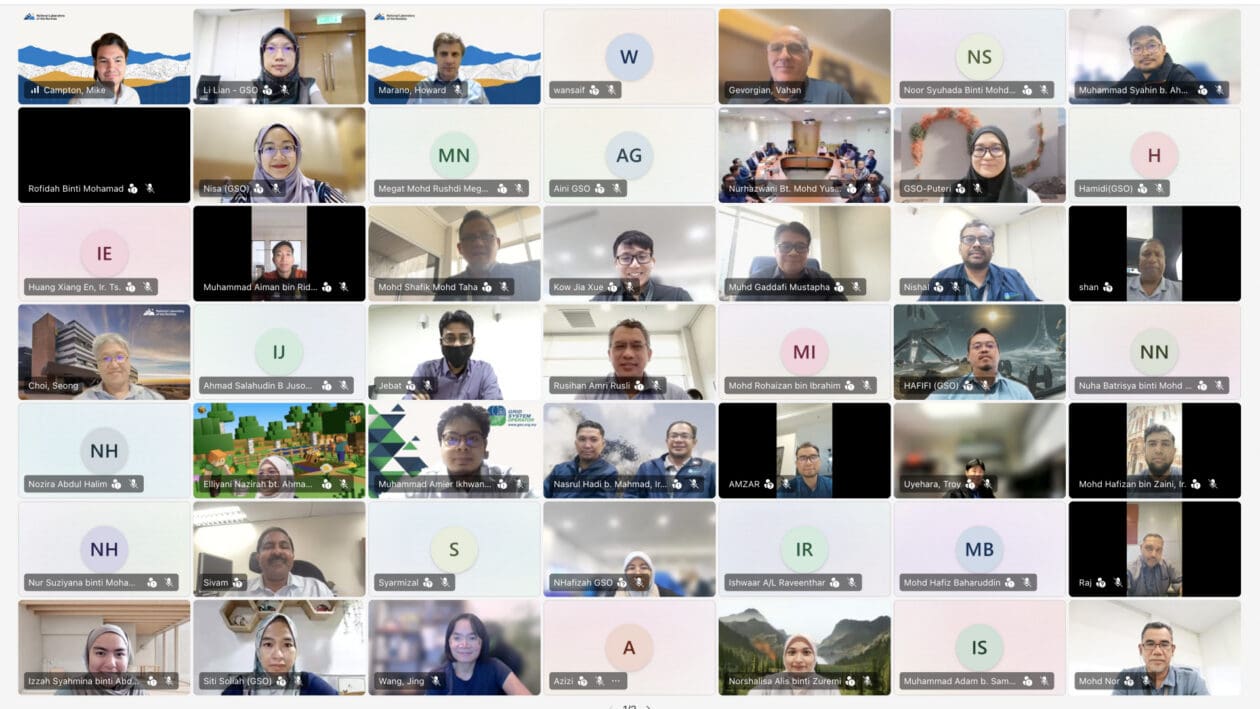 The collaboration began as a single national workshop on battery storage and has now grown into a structured exchange. The team has worked through 63 questions with more than 50 GSO technical staff. It has surfaced priority topics for further collaboration, and, by GSO’s own account, is accelerating the utility’s progress toward clearer, more robust BESS operational and testing guidelines. It’s also part of a wider regional effort that is building similar capacity with Vietnam’s grid operator, NSMO.
From workshop to working partnership
The latest chapter began in April, when the ASEAN Centre for Energy (ACE) joined GPST, GSO, Tenaga Nasional Berhad (TNB), and The Rockefeller Foundation to host a national workshop on battery energy storage system (BESS) planning, integration, dispatch, and operations, part of a broader push to modernize power systems and deliver more reliable, affordable electricity to energy-poor and underserved communities.
GSO’s leaders and technical directors worked with the NLR and GPST project team to build a structured technical exchange: detailed written Q&A documents paired with deep-dive virtual “office hours” for expert knowledge-sharing. The exchange came to a head in July, when experts from NLR, GPST, and the Hawaiian Electric Company (HECO) worked through 63 questions spanning eight themes central to grid security and energy management systems: system modelling, short circuit ratio and grid-forming testing, inertia response, fault current and black-start, protection and wide-area monitoring, grid-forming control, voltage regulation, BESS dispatch, and grid code compliance.
More than 50 GSO technical staff took part, alongside operational leadership including the Head of GSO. The sessions produced substantive exchange on issues such as power oscillation damping and inverter-based resource facility voltage operation, the kind of granular, operationally relevant detail that helps operators move from general awareness of new technologies to confident, day-to-day deployment. Out of the exchange, GPST and GSO experts identified priority topics for the Malaysian power system that merit continued collaboration through follow-on technical projects.
Ir. Shanmugam Thoppalan, Head of GSO, reflected on a relationship now stretching back several years:
“I’d like to thank GPST, I think we’ve been working with GPST for the last three years… It’s very wonderful, the extended collaboration given by GPST, and this time around together with NLR and HECO. It’s very enlightening to the team, all this learning.”
Supporting the region’s transition efforts
This work with GSO sits within a larger initiative, supported by The Rockefeller Foundation, aimed at expanding electricity access for communities and businesses that lack reliable, affordable power. Throughout 2025, the project fostered a broader community of practice among power system operators and regulators across Southeast Asia, pairing an in-person regional workshop with ongoing virtual working groups on integrated system planning, interregional coordination, and the role of battery storage in strengthening grid flexibility and reliability. The project also supported parallel work on distributed energy resources and forecasting with Vietnam’s National Market and System Operator, extending the same model of capacity-building across the ASEAN Power Grid System Operators (APSO) network.
GSO leadership summed up the impact:
“Since 2024, the dedicated partnership with NLR and G-PST has provided invaluable, timely guidance to the ASEAN Power Grid System Operators, significantly elevating regional technical capabilities amidst accelerating energy transition, higher variable renewable energy, BESS deployment and expanded cross-border trading.”
On the BESS sessions specifically, they added that the work gave GSO the clarity and evidence-based insights needed to accelerate its progress toward clear, robust BESS operational and testing guidelines.
Looking ahead
Malaysia’s experience points to a broader lesson that technical capability grows fastest when knowledge-sharing is sustained, structured, and grounded in operational questions. As GSO and its regional peers integrate more variable renewable energy and battery storage while expanding cross-border power trading, this model of ongoing, expert-led exchange offers a practical template for the rest of the region. GPST and NLR look forward to continuing the partnership with GSO and supporting similar collaborations with system operators across Southeast Asia.