
This edition highlights recent projects, partnerships, and resources from the Global Power System Transformation (GPST) Consortium.

Featured News
GPST researchers at Imperial College London testing oscillation detection and identification breakthrough
Sub-synchronous oscillations are a known and manageable feature of power systems. Inverter-based resources offer some solutions for addressing these events; they also create a new dynamic within complex systems. Typical approaches for evaluating oscillation risk are limited and may not be sufficient for system-level assessments.
The EPICS Centre at Imperial College of London, which focuses on research to address the highest priorities of GPST system operators, has developed innovative approaches for detecting and identifying the sources of oscillations. Going back to the fundamental physics of power systems, the research team is working with Scottish Power, NESO, Energinet, ONS, AEMO and other operators on developing approaches that help with prediction, early warning and locational identification of oscillations, as well as post-event analysis to determine opportunities for operational improvements and prevention or mitigation approaches. This work is being presented at several forums this year and in a global webinar co-hosted by GPST and Imperial College of London.
Learn more about this work and find out how to get involved: View post about oscillation detection
GPST convenes operators and research institutions on power system stability and dynamics
In April and May 2026, GPST hosted invitational conversations with system operators and leading research institutions to discuss projects and initiatives tackling power system stability and dynamics. Fourteen operators shared their experiences and the innovations they are advancing in this critical field. GPST will continue hosting deep-dive conversations on topics of highest priority to our operator participants.
Reach out if you’d like to get involved: info@globalpst.org
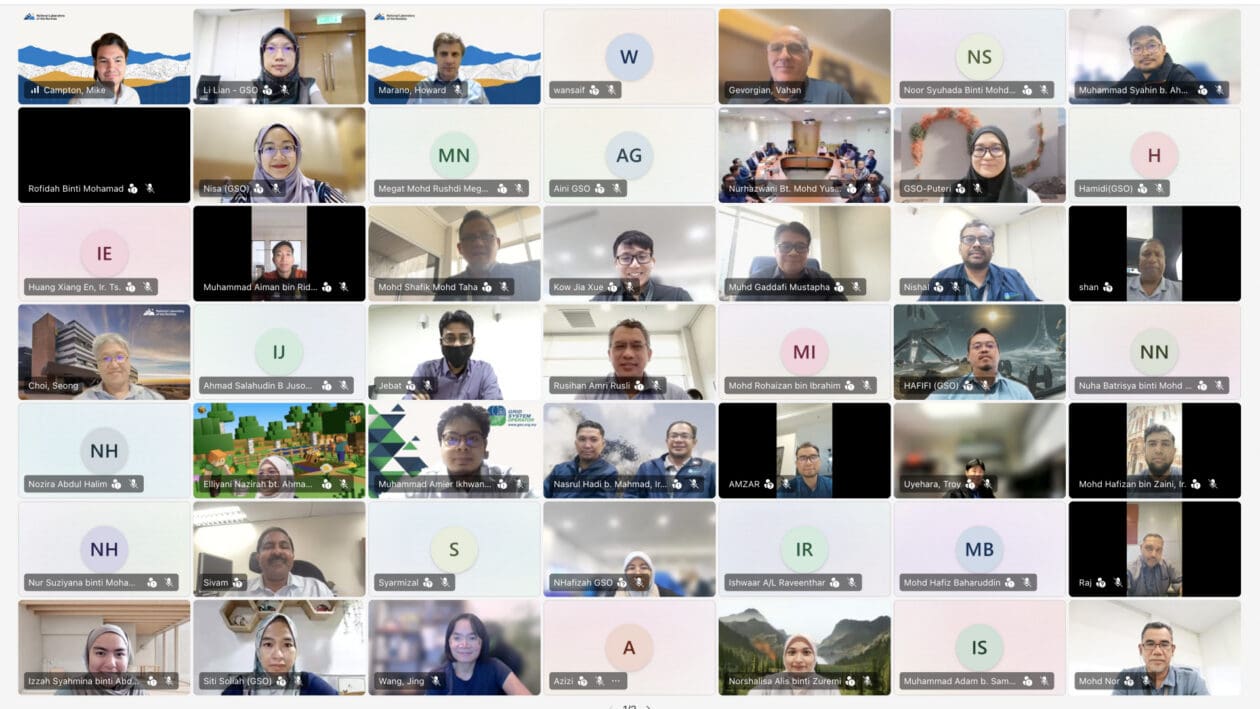
Growing partnership with Malaysia’s Grid System Operator (GSO)
GPST team members and technical experts at the National Laboratory of the Rockies (NLR) have built a growing partnership with Malaysia’s Grid System Operator (GSO) through a project focused on grid modernisation in Southeast Asia.
In April, building upon a years-long collaboration and community of practice in Southeast Asia, the ASEAN Centre for Energy (ACE), in collaboration with GPST, GSO, Tenaga Nasional Berhad (TNB) and the Rockefeller Foundation hosted a national workshop on battery storage planning, integration, dispatch and power system operations as part of a broader strategy to modernise power systems and deliver more reliable, affordable electricity to energy-poor and underserved communities.
Following this workshop, GSO leaders and technical directors worked with the project team at NLR and GPST to develop an efficient and creative technical exchange mechanism. NLR, GPST and HECO (the Hawaiian utility) answered 63 questions on eight grid security and EMS themes and hosted deep-dive virtual “office hours” for expert knowledge sharing.
GPST technology standards experts contribute to IEEE 2800.2 publication
On June 30, 2026, the IEEE Standards Association published IEEE 2800.2, Recommended Best Practices for Test and Verification Procedures for Inverter-Based Resources Interconnecting with Bulk Power Systems. The document, which complements the framework set out in IEEE Standard 2800, is the product of the inverter-based resources (IBR) interconnection working group, chaired by Andy Hoke, a research engineer at the National Laboratory of the Rockies and a leader of GPST standards implementation in countries around the world.
Hoke noted, “This new recommended practice helps establish a strong foundation for a reliable and secure electric power system. It is the product of over 200 industry stakeholders working together to collect and agree on best practices to make sure IBRs meet evolving grid needs.”
Jens Boemer, leader of GPST’s technical standards work stream, chairs the IEEE Subcommittee that sponsors the 2800.x series of standards and was also a key contributor. These standards support system operators because they can help ensure that those operators can tap into maximum performance capability from IBRs that interconnect to their system, and they help ensure that IBRs perform as anticipated, supporting ongoing stability in high-IBR systems.
Find the standard on the IEEE website.
See the public EPRI webinar on this new standard noted below.
GPST partners with Global Grids Catalyst and Breakthrough Energy on data schema workshop
More than 40 participants from NLR, Princeton, TU Berlin, Encoord, ENTSO-E, TransitionZero, Open Energy Transition, Nodal Tools, Sylvan, Google Tapestry, LF Energy, EPRI and philanthropy organisations (BE-GRIDS, Sequoia Climate Foundation, Rockefeller Foundation and Global Energy Alliance) came together April 9, 2026 in a virtual workshop to build shared understanding of data schema approaches for grid planning model interoperability. Seven schema teams presented (CIM/CGMES, PyPSA, CESAME, SAInt, Sienna/GridDB, GenX and GDM), and the group worked together to identify shared approaches, key differentiators and common goals for future joint work in this area
Partner Updates
ESIG completes technical report series
ESIG’s Large Load Task Force recently wrapped up a series of 11 technical reports, covering a wide range of topics including planning, forecasting, modelling, interconnecting, markets and operation. The task force represents and engages practitioners from developers and OEMs to regulators and researchers. The reports provide state-of-the-art examples, practices and emerging solutions designed to address practical gaps. The papers also support decision-makers with options that are grounded in the latest information and real-world experiences.
In addition, ESIG will host a workshop on Large Loads as a side event to the Energynautics Conference in Porto, Portugal.
Check out the upcoming events section below.
CSIRO releases latest Australian electricity transition reports
GPST core team research institution CSIRO built off of its five-year track record of cutting-edge research on the GPST and Australian Research Agendas. In July, CSIRO published the final reports on 17 topics, performed by research and industry teams around Australia. CSIRO also hosted a global webinar showcasing the projects and results.
Fraunhofer introduces complementary grid forming concept: unlocking inertia from inverter-based resources
As inverter-based resources increasingly replace synchronous generation, power systems need new ways to provide stabilising capabilities such as inertia. Researchers at Fraunhofer IEE and the University of Kassel have introduced the concept of Complementary Grid Forming (C-GFM) to make better use of resources that cannot provide the full range of conventional grid-forming capabilities but can nevertheless make valuable contributions to system stability.
Two new open-access publications develop this concept. The first introduces C-GFM and a controller-independent framework for characterizing power-electronic inertia from constrained resources (read the full paper on complementary grid forming). The companion paper shows how this inertia can be tailored to the actual active-power constraints of individual resources, allowing batteries, renewable generation and other converter-connected assets to contribute according to their specific physical capabilities (read the full paper on power-electronic inertia). The work aims to broaden the range of inverter-based resources that can support future system stability and provides a methodological basis for specifying and coordinating complementary grid-forming capabilities.
Explore the broader perspective and read about Inverter-Dominated Future Power Systems: A Roadmap for System Stability
GGI fossil fuel crisis task force releases ten-point plan
In response to the recent fossil fuel crisis, the Green Grids Initiative (GGI) observed that global energy systems are facing repeated crises that expose the same structural vulnerabilities each time. GGI developed a rapid-response task force and published guidance briefs on actions that can be taken to mitigate these crises. This GGI report sets out a ten-point plan of grid interventions that countries can deploy in the short term to reduce fossil-fuel dependence, ease pressures on consumers and build long-term energy security.
RMI publishes flexibility guidebook for regulators
GPST recently supported the Rocky Mountain Institute (RMI) in a technical review of a practical guidebook for regulators and policymakers on how to identify evolving reliability needs, define flexibility services and design procurement mechanisms for enhancing flexibility in highly inverter-based power systems. The report highlights case studies and examples that illustrate a framework of procurement and market design mechanisms. It also includes an appendix summarising common operational monitoring tools, the types of indicators they provide and the reliability needs they can help identify. The work was developed in partnership with the Global Energy Alliance as part of the Global BESS Consortium. As part of this publication, RMI also developed a companion report on BESS bankability and market scaling.
Recorded Events
July 08 | Virtual
Leveraging voluntary conformity assessment standards to improve interconnection, performance, and modeling of inverter-based Resources (EPRI)
EPRI public webinar provides an in-depth review of the IEEE Standard 2800.2 for interconnection of inverter-based resources.
Recent Events
April 15–16 | Kuala Lumpur, Malaysia
Building Capacity for BESS Deployment in Malaysia
The ASEAN Centre for Energy (ACE), in collaboration with GPST, the Malaysian Grid System Operator and Tenaga Nasional Berhad (TNB), hosted a national workshop focused on practical approaches to battery storage planning, integration, dispatch and power system operations. Read more on feature story.
May 11–15 | Medellín, Colombia
ISA Knowledge and Innovation Days 2026
This research conference, hosted by ISA, explored energy system innovations. GPST’s director of system operator partnerships, Lina Ramirez, served as a technical judge and connected participating researchers with the GPST research agenda. The convening highlighted how innovation is being embedded into everyday grid operations, underpinned by strong data foundations and robust information governance practices. Taken together, these initiatives illustrate that successful digital transformation depends not only on technology, but equally on people, knowledge and organizational culture.
July 28 | Virtual, Malaysia
BESS workshop
See post about GPST strengthens partnership with Malaysia’s grid system operator.
August 19-21 | Cartagena, Colombia
8th XM Forum
The 8th XM Forum, co-hosted this year by the Inter-American Development Bank / RELAC initiative and GPST, showcased emerging practices and research in flexibility and resilience in highly inverter-based power systems. GPST delivered a keynote address and technical presentations sharing lessons from cutting-edge research and system operator best practices. Imperial College of London research leaders shared recent results from their work with power system operators around the world on sub-synchronous oscillations.
Upcoming Events
September 14-16 | Berlin, Germany
LF Energy Summit Europe 2026
This year’s LF Energy Summit, held under the theme “Develop the Modern Grid, Together”, brings transmission and distribution operators, researchers and open-source developers together across two days of technical sessions (15–16 September, plus bonus workshops on the 14th). Presenting organisations include RTE, TenneT, Alliander, Elia, E.ON, 50Hertz and Hydro-Québec, with sessions spanning grid simulation, substation automation and open-source tools for the modern grid.
September 17-18 | Berlin, Germany
50Hertz Global System Operations Summit
This year’s Global System Operations Summit, held alongside LF Energy Summit Europe as part of Berlin’s Grid Transformation Week, has already filled up. We’ll be following the sessions closely and will share a full readout of key takeaways once it wraps. Stay tuned!
September 28 – October 2 | Porto, Portugal
Renewable Energy Grid Integration Week by Energynautics
Energynautics‘ flagship event, Grid Integration Week, returns to Porto, combining the 25th Wind & Solar Integration Workshop with the 10th E-Mobility Power System Integration Symposium. The week brings together TSOs, DSOs, researchers and policymakers to exchange practical solutions on power system stability, grid-forming technologies and sector coupling.
More information about this event
ESIG will host a workshop on Large Loads on the side of this event.
October 20 | Leuven, Belgium and online
Spine Tools in Practice: Scenarios, Data and Investment Pathways for Energy Planning
GPST’s partners at VPP will host the final Mopo project workshop, “Spine Tools in Practice: Scenarios, Data and Investment Pathways for Energy Planning” The workshop will showcase the latest developments and practical applications of Spine Tools, an open-source suite supporting energy system modelling and planning. The event will explore how Spine Tools can support complex scenarios, energy data management, repeatable analysis workflows and investment pathway exploration. The workshop will also present new model components and use cases.
October 21-23 | Athens, Greece
APEx Annual Conference 2026
Hosted by the Hellenic Energy Exchange, the 29th annual gathering of the Association of Power Exchanges convenes senior representatives from power exchanges, system operators and regulators worldwide under the theme “Built on Legacy” to discuss the future of competitive electricity markets. GPST will participate in a panel on the Control Room of the Future.
More information about this event
October 27-29 | Kuala Lumpur, Malaysia
ASEAN Grid System Operators Convention (AGSOC)
Hosted by Malaysia GSO, the 2nd annual AGSOC will focus on the topic of ancillary services, with panels and discussions of interest to grid operators in Southeast Asia and beyond. The convention builds on last year’s inaugural event, offering system operators a recurring platform to exchange lessons learned and coordinate on shared technical challenges across ASEAN.
October 26-30 | Singapore
Singapore International Energy Week (SIEW) 2026
The 19th SIEW, themed “Connecting Energy Systems, Powering Tomorrow,” convenes global policymakers and industry leaders on regional grid interconnectivity, clean energy technologies and the rising power demands of AI and data centres. ISGAN-related engagements are expected on 28–30 October.
More information about this event
October 27-30| Singapore
Workshop on distributed energy resources
CSIRO, ISGAN, IEA Singapore and ACE will co-host an invitational workshop on Distributed Energy Resources and a meeting of ISGAN Working Groups from October 27–30, 2026, in Singapore on the side of Singapore International Energy Week. The workshop will bring together decision-makers and technical experts to discuss DER planning and integration as Southeast Asian power systems scale up distributed solar and storage.
October 26-30| Reston, VA
2026 Fall Technical Workshop by ESIG
ESIG’s Fall Technical Workshop gathers utilities, system operators, researchers and regulators for several days of technical exchange on integrating variable and distributed resources and growing large loads onto the power system. Sessions are expected to cover grid-forming inverter implementation, resource adequacy and system stability. There will be a one-day special workshop devoted entirely to the stability topic.